The National September 11 Memorial, December 2012

One World Trade Center, still under construction.

The National September 11 Memorial in New York City is still under construction, but my wife and I decided to head down there and look around earlier this week. We’re going down to Georgia this coming week for the holidays and a relative asked us to take some photos of the site for her. We’d been meaning to go, so that was a great opportunity for us to stop being lazy and get off our butts and head downtown.

When we got there, I was a little concerned that we wouldn’t be able to get in. There were signs posted in the surrounding streets that said that tickets were available online and in limited quantities at the 9/11 Memorial Site Preview office on Vessey Street between Church Street and Broadway, across the street from St. Paul’s Chapel. Luckily, when we got to the office, we were informed that there were free tickets from the 2:30 PM entry to the WTC site. It was about 2:05 PM at the time, so I guess they were passing out the extras that didn’t sell. I have no idea why the tickets were free, really, except that it probably had something to do with lack of demand at that time of day on a Thursday the week before Christmas. It seems as though you get a ticket that’s good for entry to the site only at a certain time. I assume they expect people to leave after a certain amount of time and the tickets being separated by an hour keeps the site from becoming too crowded.
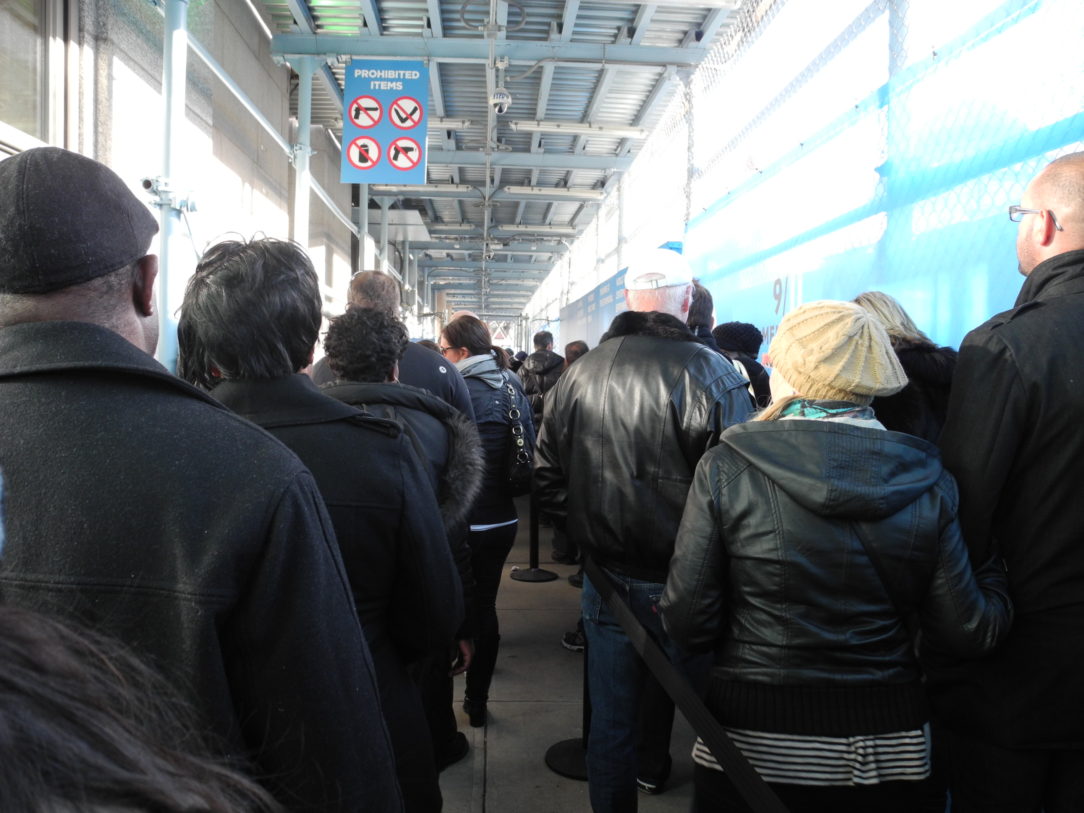
The line for security screening at the World Trade Center site.
Pictures on the wall in the security screening room.

After we got our tickets we had to walk down Church Street, which turns into Trinity Place, until we got to Thames Street, where we made a right. The entry to the site is at the corner of Albany and Greenwich Streets. Getting into the site is a long process. First, we had to show our tickets of course. Then, since there wasn’t much of a crowd, we walked past the back-and-forth roped off area for long lines and went straight to the line for security screening. While we were waiting, I joked that we were going to get free sexual assaults along with our free tickets and if we were suspicious (like most people are), maybe a free cavity search, MRI and X-Ray. Luckily, the airport style security screening went fairly quickly. The only interesting thing that happened was when one of the guards was complaining to her coworker that another guard never took a turn at the door directing people to the metal detector lines. I imagine the guard in question was avoiding that particular job because it was cold out that day.

The entire area of the National September 11 Memorial is sealed off from the rest of the city by security fences. After getting tickets, walking to the entry area, and then following the lines, by the time we actually walked into the site itself, we had almost gone all the way around it in a circle. It would be nice if at some point the site could be truly free and open, so people could walk through the area and look at the monuments, like any other monument in the country, but people are still so afraid of terrorism that it’s likely the site will stay walled off. Then, of course, there’s also the fact that the city wants to use it as a way to make money, charging an admission. To me, that seems borderline disrespectful, that the city wants to use a tragedy that caused the deaths of almost 3000 people and the injury of about 6000 more as an opportunity to make a buck. It also seems to defeat the purpose of building the memorial, which I assumed was meant to be a testament to the strength and power of the country, as well as a memorial for those who died in the terrorist attack. Instead, our testament to the strength of our country will remain hidden behind fences and barriers. It’s tough to say whether or not those barriers are necessary. On the one hand, it would be a symbolic victory for terrorists to strike the site again. On the other, the monuments in Washington DC don’t have fences and guards around them and they’re just fine.
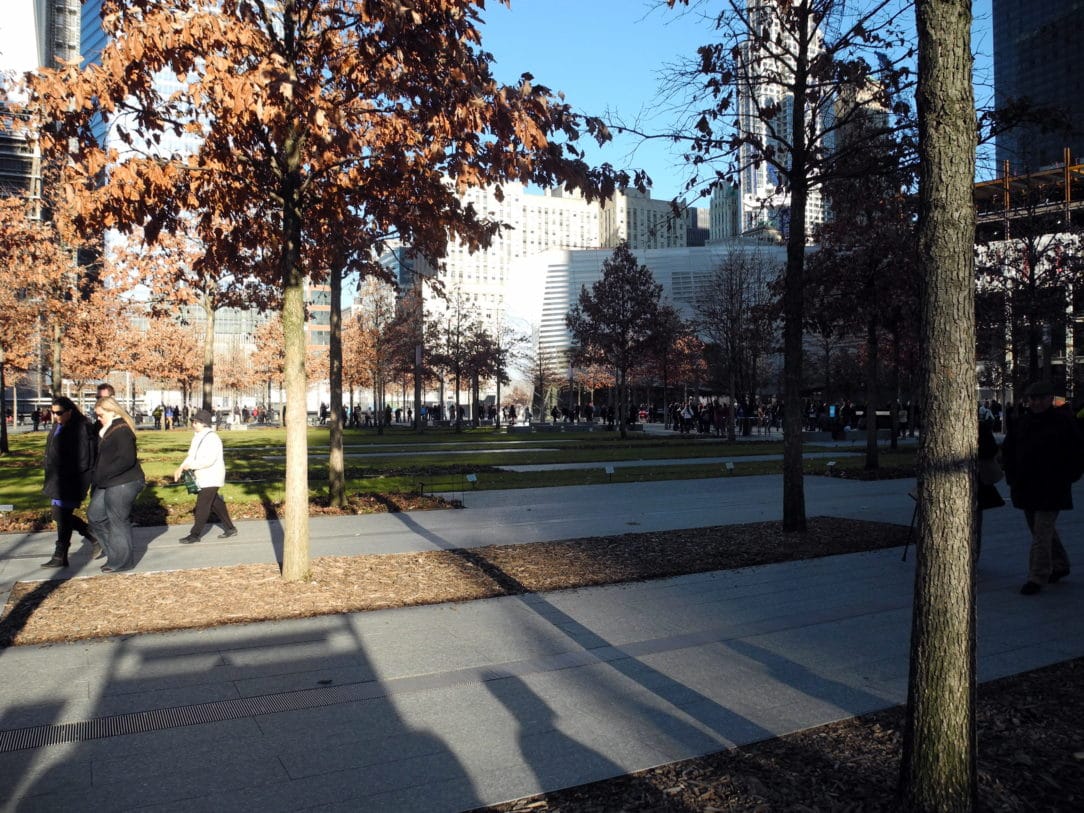
September 11 Memorial Plaza

During Winter, the memorial site is a pretty chilly place, both figuratively and literally. With no tall buildings in the area, the wind rips through the plaza non-stop. The reflecting pools are sunk down into the ground and the wind was getting caught down in the north pool, turning the water falling down the sides into a fine mist that blew across the plaza, adding to the chill.  The leaves on the trees were brown and falling. The sky was overcast. Everything looked a little grey.
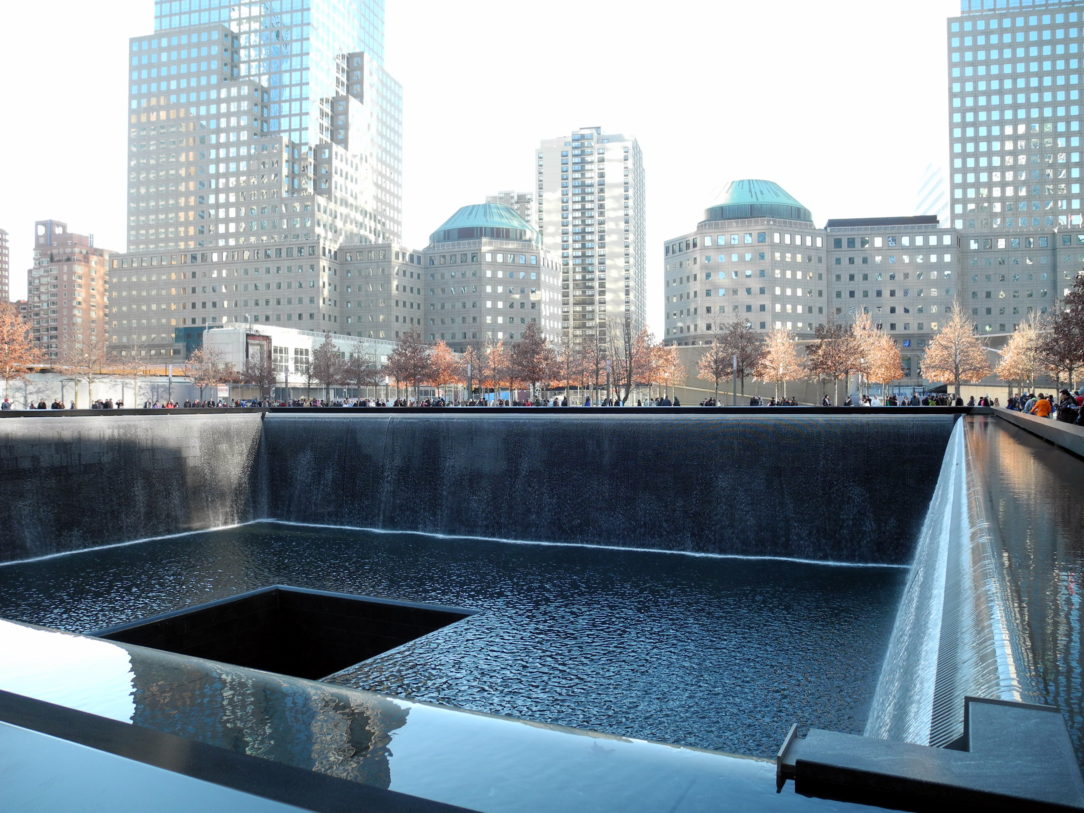
World Trade Center Memorial, South Reflecting Pool 1
World Trade Center Memorial, South Reflecting Pool
World Trade Center Memorial, South Reflecting Pool 2
World Trade Center Memorial, South Reflecting Pool
World Trade Center Memorial, South Reflecting Pool 3
World Trade Center Memorial, South Reflecting Pool
World Trade Center Memorial, South Reflecting Pool 4
World Trade Center Memorial, South Reflecting Pool

My wife and I went in different directions around the south reflecting pool. I took my time, taking photos, looking down into the hole that used to be a foundation, looking at some of the names on the railing that surrounded the pool. The only word I can think of to describe the mood of the place is that it was not depressing, but sort of subdued. But, it should be a little subdued. I don’t know that the place will ever be one where people go to picnic and laugh during my lifetime. Maybe. Maybe in 60 years, when the memories have faded and most of the people who were alive at the time have passed on.
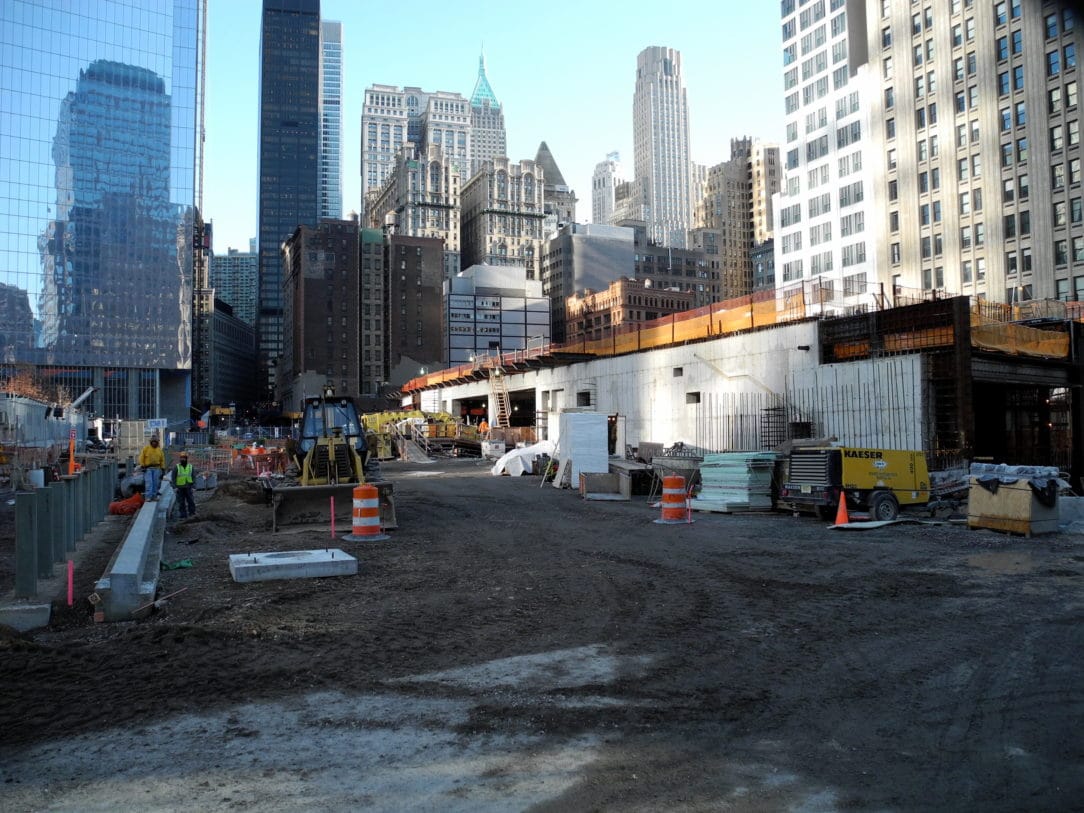
Construction surrounded the September 11 Memorial Site.
The September 11 Memorial Museum that hasn't opened yet.
The September 11 Memorial Museum that hasn’t opened yet.

Because of the construction going on all around the site, it was hard to appreciate the place for its architectural beauty. One World Trade Center isn’t even finished yet. The museum on the site hasn’t opened yet either. I remember reading that there was some delay due to money problems. I’m looking forward to going back again in a year or so, hopefully during the summer or spring. My wife was impressed by the reflecting pools, but she was mostly too cold to enjoy the trip like she wanted to. She wants to go back again, too, when it’s warmer. Maybe we’ll get lucky and get some more free tickets!

Some random guy photobombing my shot.
The 9/11 Memorial Motorcycle in the Gift Shop


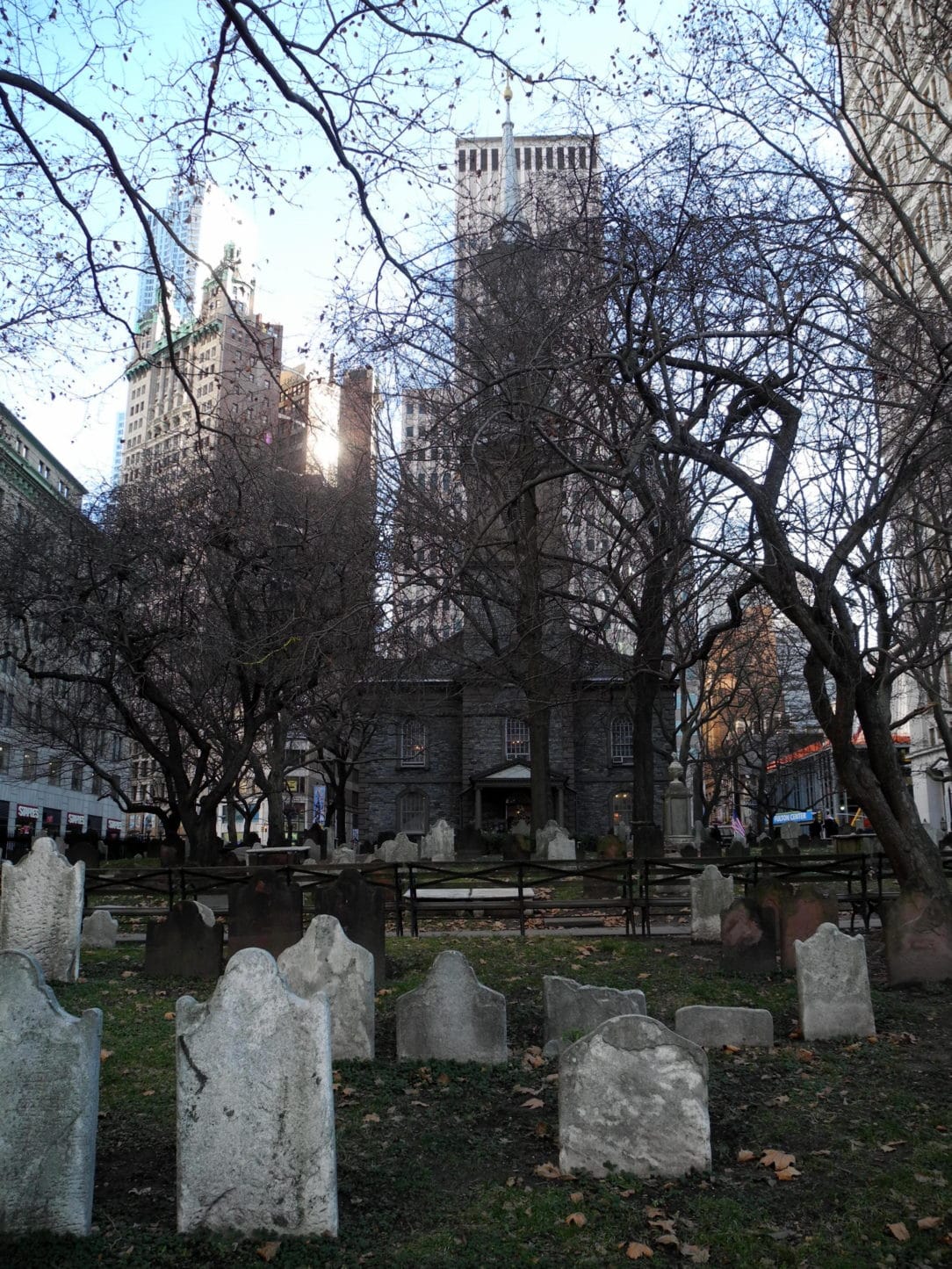
St. Paul’s Chapel and Cemetary next to the World Trade Center Site

St. Paul's Chapel and Cemetary
St. Paul’s Chapel and Cemetery

Last Thursday my wife and I went downtown to the National September 11 Memorial site. To get to it, we had to walk past St. Paul’s Chapel and Cemetery and my wife was interested in having a look around, so we went in.  I’ve been there a few times before, but it was her first time. She remembered hearing about the chapel in the news and wanted to see it first-hand.

St. Paul's Cemetery
St. Paul’s Cemetery

We walked through the cemetery first. She was impressed by how old the headstones are. I am too. It’s weird to see gravestones still erect for people that died in the 1760s next to so many buildings of modern construction. It’s so out of place. It’s nice to see that the chapel and the cemetery survived and weren’t torn down to build something new, especially in considering the important role the chapel played during the September 11th tragedy, when rescue and aid workers used the sanctuary as a place to rest and recover for a few hours before going back out to look for survivors again.

Memorial to September 11 Victims in St. Paul's
Memorial to September 11 Victims in St. Paul’s
George Washington's Pew at St. Paul's
George Washington’s Pew at St. Paul’s
Oldest painted seal of the United States

When you walk through the chapel, it’s hard to not be touched by the memorials set up around the outer edge, artifacts left behind by people looking for loved ones mixed in with older stuff, like George Washington’s pew and what is touted as the oldest painting of the seal of the United States, which looks more like a turkey than an eagle, probably due to influence from Benjamin Franklin, who wanted the national bird to be the turkey. On a side note, it’s good that he didn’t get his way, or else what would we eat on Thanksgiving? It would be a federal crime to roast our turkeys!

Rosaries on wooden hands in St. Paul's Chapel
Rosaries on wooden hands in St. Paul’s Chapel
Rosaries on wooden hands at St. Paul's Chapel
Rosaries on wooden hands at St. Paul’s Chapel

Seriously, though, on my previous trip I never really stopped to considering and think about the people in the photos set up on the alters, or the stuff that was moved inside from where it used to be posted on the fences around the church. It’s hard to stand there and think about the people, on an individual level, that died there that day. It’s easy when you’ve only got this vague idea in your head of some 3000 people. It’s harder when you look at the photos and wonder what their life was like and who they left behind. Who cried for them? What were there final moments like? How has the event changed the lives and world views of those closest to them?

Police and Search and Rescue unit patches left behind as symbols of solidarity
Sanctuary of St. Paul's Chapel
Sanctuary of St. Paul’s Chapel

The informational plaques were nice. It helped tell the story of the place. It explained why there are no pews left in the center of the building, and where all the patches on the priest’s garment (I forget the actual name of it) came from.

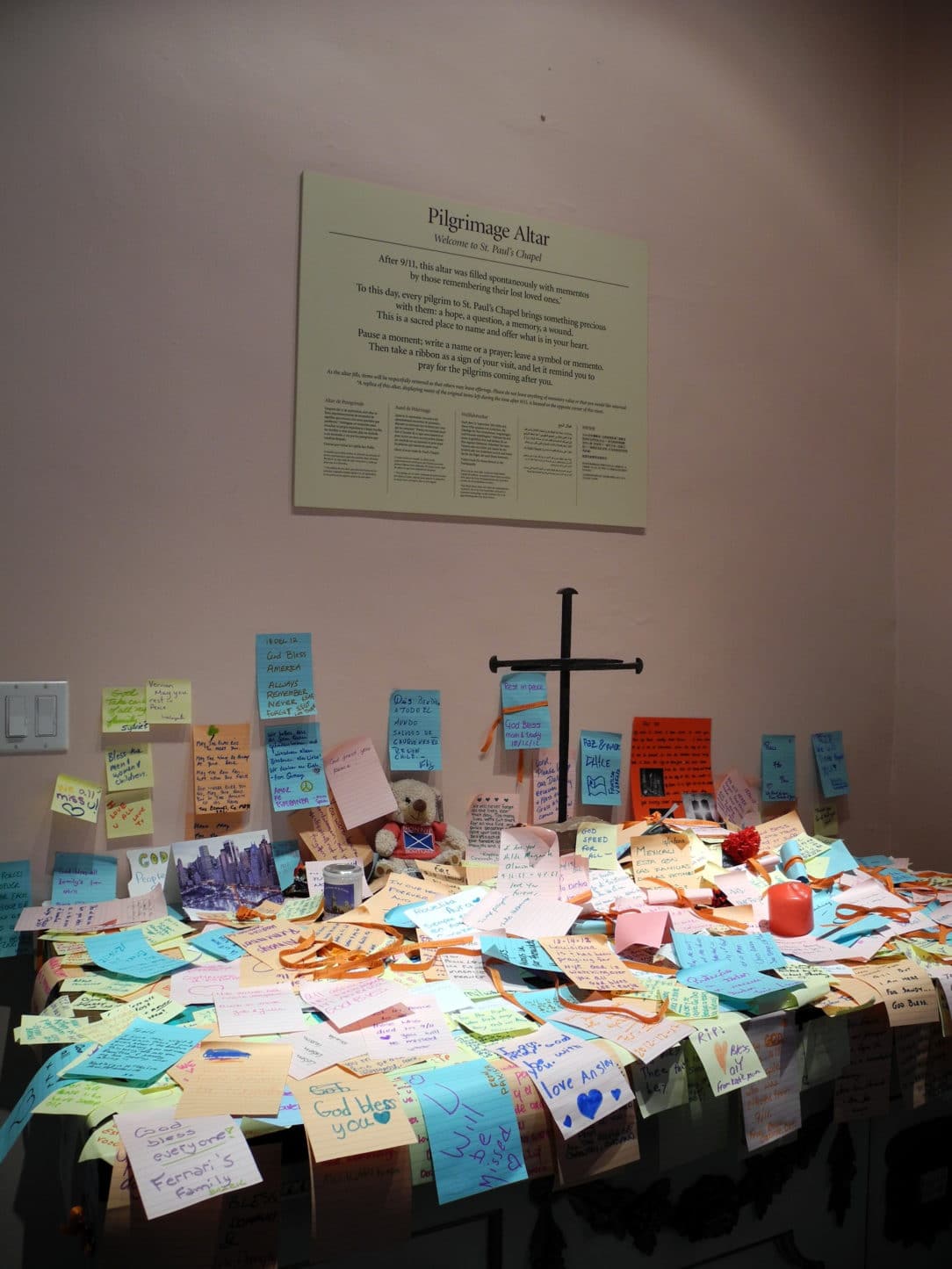
Pilgrimage Altar at St. Paul's Chapel
Pilgrimage Altar at St. Paul’s Chapel

I thought the “Pilgrimage Altar” was especially interesting. Is St. Paul’s a site of pilgrimage now? It’s hard to think of it that way, in the same category as Canterbury, Santiago de Compostela, or Jerusalem. But perhaps it is a place of pilgrimage in a broader sense of the word. People were encouraged to leave behind thoughts and prayers for those who perished at the nearby Trade Center site, which they did, covering the altar in notes.

St. Paul’s is an important site of remembrance that has surpassed its role as a Christian church. It is now a site of tourism and pilgrimage for people of all faiths or no faith, to remember the loss suffered by so many on that day, to contemplate how the world changed, and maybe to hope for something better in the future.

5 Napkin Burger at 14th and 3rd Ave

Holiday decorations inside the 5 Napkin Restaurant at 14th Street

I don’t remember exactly when the place opened, but for the past few months the 5 Napkin Burger restaurant has been full of people almost every time I’ve gone by. The smells of cooking hamburgers wafting out of the restaurant onto 14th Street made it hard to walk by without getting hungry. So, it wasn’t much of a surprise when my mom asked me and my wife to take her there for her birthday dinner.

Christmas ornaments hanging from the pipes on the ceiling
Chalk board covered with drawings, including a flask and Bunsen burner.

The holiday decorations inside the restaurant are nice. It felt festive. My wife pointed this out to me later, but it looks like the restaurant has a biology lab decor underneath the Christmas decorations. I don’t really get it. Is the implication supposed to be that they’ve used science to perfect their burger recipes? It feels like a bit of a mental stretch and personally I don’t want to think about biology labs or what might be festering in Petri dishes while eating.

5 Napkin's signature 5 Napkin Burger
5 Napkin’s signature 5 Napkin Burger
5 Napkin Steak and Eggs (Eggs hidden behind fries)

My mom and I opted for the signature 5 Napkin Burger. I figured I might as well get what should be their best dish. My wife opted for the steak and eggs. I was tempted to join her. We’ve been watching King of the Hill on Netflix and the night before we’d seen an episode about Hank, his propane and propane accessories and grilling steaks.

The 5N burger costs about 15 bucks. That’s steep, but they do give you a very, very large portion of food. I cleared the plate but my mom took half of her burger home for dinner. I should have done the same because later I wound up with a stomach ache that left me incapacitated on the couch for about two hours. The burger sat in my stomach like a lead weight for most of the day and then just sort of knocked me down for a while late in the evening. Luckily, everything cleared up the next day. If you know what I mean.

Anyway, the food quality is decent.  According to the missus, the steak and eggs were good, but she’s had better.  She said the portion was a good size, but it wasn’t extraordinary and the quality wasn’t comparable to the price. The 5N burger itself was tasty, but the portion was so big it was hard to hold it all together, especially when the juices from the meat started to run out onto my hand. Not that I’m advocating dry burgers, but I think the whole thing would come together better if the portion was just a more… normal size. The heavy garlic butter stuff (I forget the fancy name) along with the extra juiciness (grease?) and the lack of vegetables in the burger caused it to have a very unbalanced taste, and it might also be what led to my discomfort later in the day.

Some bizarre "cocktail" that tasted like flat champagne and cost 10 dollars.
Some bizarre “cocktail” that tasted like flat champagne and cost 10 dollars.

The worst part of the meal was this holiday cocktail that was supposed to be a mix of champagne, some essence of elder flower, mulled ginger and some other essence of something that came in a tiny glass (that I got charged 10 bucks for…) and tasted like flat champagne. The only bubbles in the glass were coming from the interaction between the ‘champagne’ and the translucent slice of ginger in the bottom of the glass, which didn’t seem to help the taste of the drink at all. I can’t figure out why it cost so much, either. Do essences of stuff that add no flavor to a drink cost a lot? It certainly wasn’t costly because of the size of the drink. We mentioned the lack of taste to what I assume was a manager, since I think I remember him wearing a suit, and he said he appreciated the suggestion.

The best part of the meal was the onion rings. I’d go back for the onion rings. The chunks of onion are big and they’re not buried in batter. When I bit into them I could taste the onion and the batter instead of heavy oil. The other good thing about the meal was the service, up until the end when we were getting ready to leave. Some server had added an extra table to the booth across from where we were sitting that took up more than half of the walking space, so when we were trying to get out and leave, waiters and waitresses kept asking us to move out of their way. It was slightly annoying.

Thinking about the meal as a whole, we didn’t dislike it at the time. We didn’t have a ‘bad’ experience. I mean, no one left the restaurant upset, angry or disappointed. But, I don’t know that I’d want to go back and get what might be another mediocre steak and eggs or heavy (flavor-wise) burger, or flat champagne cocktail, all of which are highly (over) priced, just to get good onion rings. With three entrees, three sodas, one cocktail and two extra sides of onion rings, plus a tip, our bill wound up being 98 dollars. We could probably have been just as happy for half of the cost at any number of other burger places. So, while I think 5 Napkin is a decent meal, it’s not a decent meal that’s worth the price and I don’t think we’ll going back.

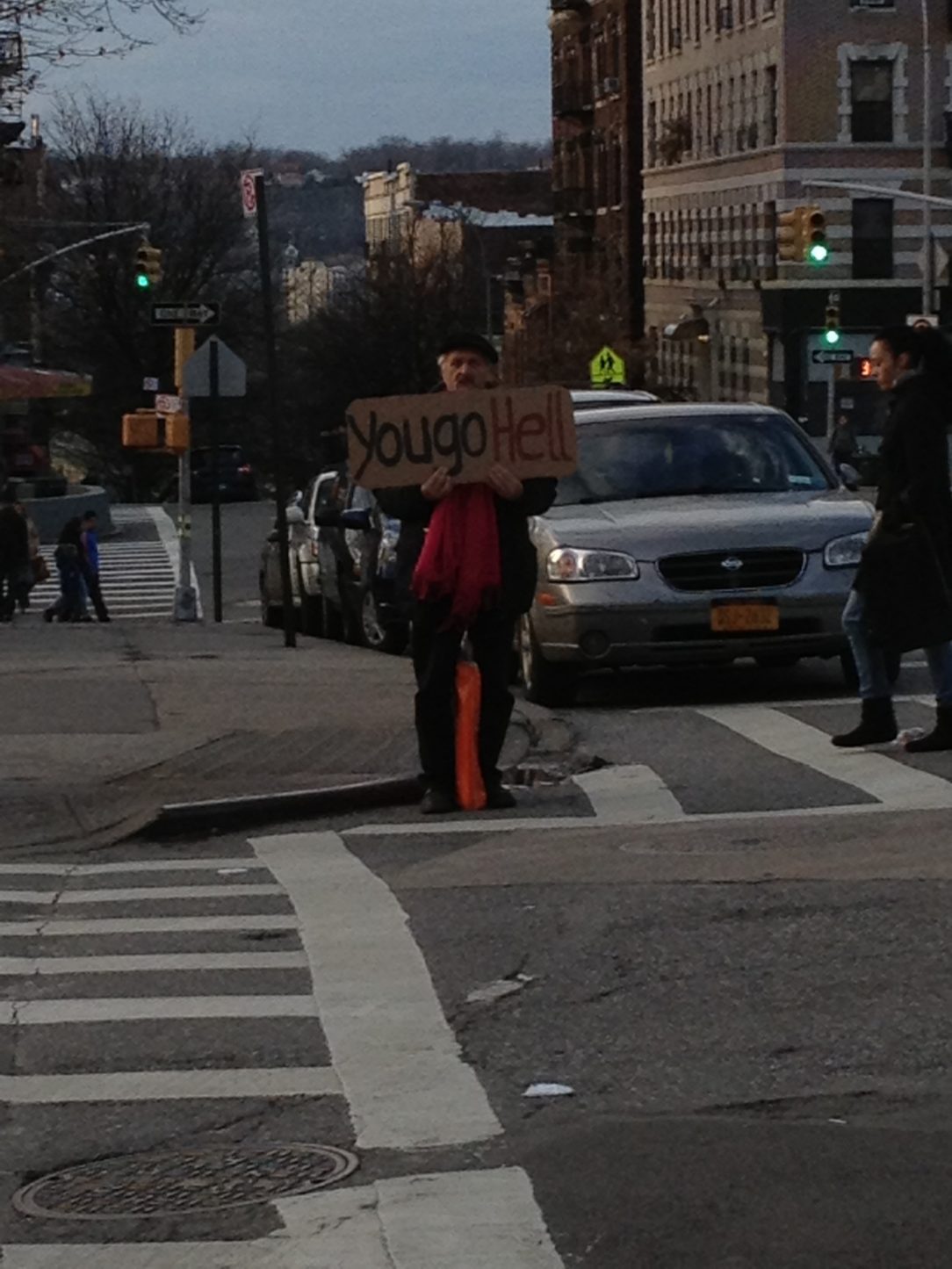
YougoHell

YougoHell
An old man holding a sign that reads “YougoHell”

Yesterday (Tuesday, December 12th), I was surprised to see this man standing on the corner of 137th Street and Hamilton Place in Harlem, Manhattan, just down the hill from the City College of New York CUNY and P.S. 325, a public elementary school.

When I walked up to the corner, a man standing by the vendor cart that’s usually there at the base of the hill selling drinks and snacks was screaming at this old guy, “No! You go to Hell!”  I couldn’t hear what the old man was saying clearly because I had headphones on, but I imagine he was saying, “No, you!” or something like that.  I don’t know if the guy was seriously offended by the old man’s sign, or if he was just doing it to agitate the old guy.

More than anything, I was wondering what happened that made this guy do this?  And who is his intended audience?  The only real foot traffic in the area that’s constant all day long is the flow of students to and from CCNY.  So, does he equate higher learning with sin?  And if he does, what higher learning it?  All of it, or just the social sciences and humanities?  And if he condemns all education, then … well, it would be ironic since he knows how to read and write, so I’m sure it’s something more specific than that.  It had to be personal though.  He wasn’t handing out literature like the religious dealers that peddle pamphlets using signs that threaten eternal torture.

He wasn’t there today.  At least, not when I walked through there.  I’d never seen him before, either.  I’m really not surprised.  This is New York City after all.  There’s always someone screaming about the apocalypse, screaming at someone, screaming at an imaginary person, etc. etc.  At least he had his pants on.

Islamism and “The Yacoubian Building”

The Yacoubian Building Book Cover

The following is a short essay I wrote about The Yacoubian Building for an undergraduate history course.

In Alaa al Aswany’s book, The Yacoubian Building, Islamism and Islamists are primarily presented through the point of view of the character Taha El Shazli, the son of a doorman who lives on the roof of the Yacoubian building.  As the story progresses, the rise of Islamism in Egypt is presented as being directly related to socioeconomic background, the lack of adequate economic opportunities and corruption present in government and society.

Taha’s family was of very modest means.  Despite this, Taha was very intelligent and was able to excel at his studies because of his desire to become a police officer, which he believed would allow him to advance in life and gain the respect and dignity that he lacked while growing up in the Yacoubian building.  As the son of a doorman, he was often ridiculed and looked down on by the other residents, which he was forced to put up with because he had no other option.  Taha was sure that he would be able to succeed in his endeavor because he believed firmly in God, prayed regularly and avoided major sins (Aswany, 20).

Taha almost reached his goal, but his socioeconomic status caused his application to be rejected.  Before attending the character interview, he had spoken to officers in his district who told him that because he had no rich and influential family members he would have to pay a bribe of 20,000-pounds to guarantee his acceptance into the police academy.  Taha wasn’t financially capable of paying a bribe of that amount and given his religious devotion, he probably wouldn’t have done it anyway.  Instead, he believed firmly in his abilities and hoped that his devotion to God would enable him to overcome that obstacle.

Unfortunately, the board wasn’t interviewing for ability or the marks of a good police officer.  They were only interested in the corrupt practices of giving out government positions to family members or people with the right amount of money.  Even though they were impressed by Taha’s answers, when it was discovered that his father was a “property guard,” he was dismissed.  This was Taha’s first taste of corruption, another in a long line of blows to his dignity, and a serious threat to his chances of ever having a respectable life.

Taha’s next attempt to push past the boundaries set by his socioeconomic background was his enrollment in the Faculty of Economics at Cairo University.  In his new surroundings, however, he still felt the sting of class divisions and was drawn towards other people who, like himself, came from humble backgrounds.  These people were more religiously observant and Taha finally felt like he’d met people that would allow him the respect and dignity he was seeking.  The level of respect and the sense of belonging he finally felt with this new group of people, student Islamists, made him far more open to radicalization.  He felt that he was valued.  He was brought into an inner circle and introduced to an influential and charismatic leader, Sheikh Shakir, which validated his need for respect and purpose.

The event that crystallized Taha’s emergence as not just an Islmaist, but a jihadi Islamist, was the trauma he experienced when arrested after a demonstration protesting Egypt’s involvement in the Gulf War.  Already having spent most of his life being bullied and pushed around because of circumstances out of his control, he was bullied, tortured and raped by the very government entity that he had at one time hoped to work for.  The corruption that prevented him from serving his country as a police officer now served to facilitate his torture and radicalization.  When Taha was finally released from prison, his dignity as a man and a human being was shattered.  His faith was shaken.  Through coaxing from his Islamist mentors, however, he was convinced that he could best recover through renewed devotion and military-style training, which Taha readily agreed to out of an intense need for both healing and revenge.

In the end, Taha became a “martyr,” dying in the process of taking revenge on the man who ordered his rape.  Because of Taha’s socioeconomic background, he had limited options to start with.  Because of the corruption in the police department (and the government office that denied his claim of unfairness) he was pushed down a path that led him to associate with Islamist oriented people of a similar background.  Further government corruption in the form of sanctioned torture and degradation in prison caused Taha to pass the tipping point.  While not all Egyptians may follow the same path to Islamism, Aswany’s message is clear:  the lack of opportunities open to people of all classes and the government’s enabling of and participation in corruption helped to create violent Islamists.